19th September, 2023 •
Are you having enough fun at work?
Written by Em Roberts
3rd September, 2026 •
August at Higson…
Summer has a way of throwing the normal rhythm off course before we’ve asked it to. Diaries get rearranged around holidays, half the team’s out at any given moment, meetings move, routines slip. Ah, there’s space between the chaos.
Often we wait for a slow patch to do things differently (and that never quite arrives!). So at Higson we aim to take a step back in August, and then avoid trying to force everything back into its usual shape.
When the pattern’s already broken, this is exactly the moment we can be intentional about how we pick it back up. It’s not an overhaul. It’s small, deliberate shifts and a bigger sprinkle of experimentation in how we approach things. A chance to be like Alice, and get lost down a rabbit hole.

We take the chance to flex development areas that are outside the norm and are encouraged to think big picture and be intentional with our time.
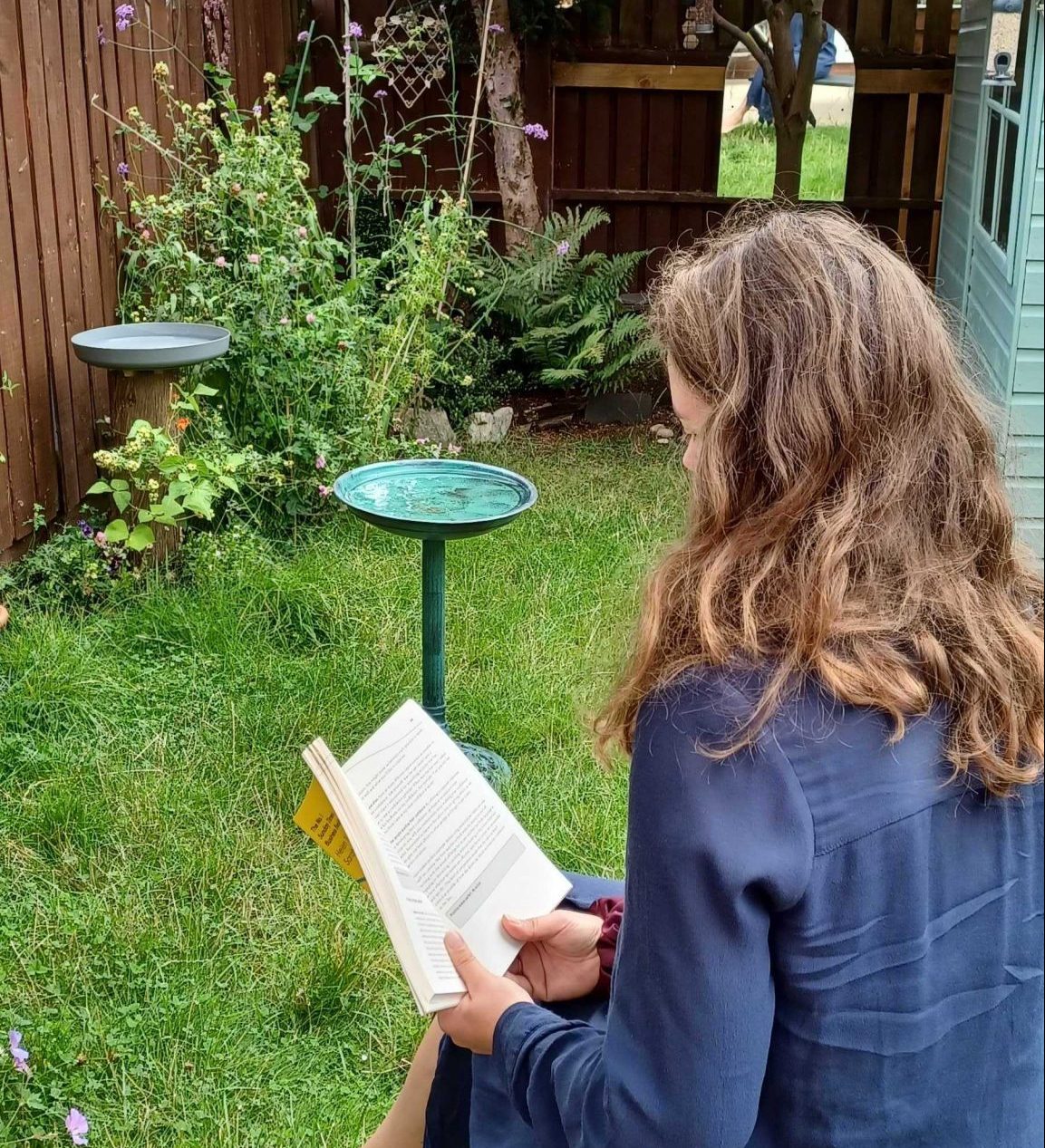
This blog is not about blocking time to read eight books or listening to a series of podcasts; instead focusing on those small moments that summer’s natural disruption can bring – to read that article, try that thing, or ask that question that sparks a different perspective.
We encourage you to use these interviews as inspiration for the next time your own schedule either has a little more wiggle room or the chance to do things differently.
Space to step back: Mimi is getting off the dance floor
For Mimi, the biggest benefit of a shift in the norm has been the opportunity to step back and zoom out.
‘Business as usual’ means that it is easy to get lost in the weeds of emails, meetings and other reactive tasks that pop up and grab our attention.
Mimi took the time to understand the dance-floor-and-balcony analogy from leadership expert Ronald Heifetz. When you’re on the dance floor, you’re in the middle of it all. Reacting, moving and making decisions (just one more drink?) From the balcony, you can observe the whole dance floor from above. What’s working, what’s out of step, stepping away to understand the next groove to move from.
I’ve been thinking more about how I’m using my time and making sure I’m doing the bigger strategic thinking
For Mimi, in her role as Head of Marketing, it’s prompted her curiosity about where she wants our marketing to be in three or five years, rather than getting caught in our annual strategy goals and the general weekly demands. It highlights an aspect we discuss in our productivity sessions: that being busy can feel productive, but it doesn’t mean that we are spending time on the things that matter most.
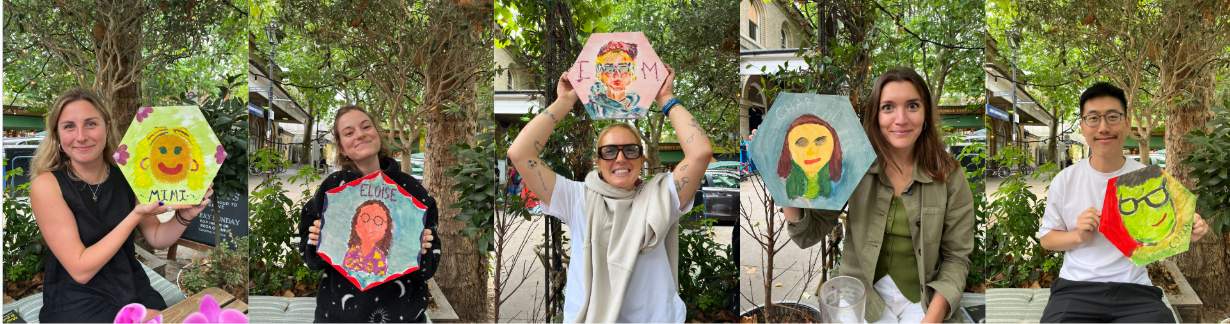
Mimi’s recommendation for you to try:
Space to challenge: Charlotte is hunting for the 1% improvements
Charlotte has been taking a step back and asking some questions about how we approach formal proposal responses. With the usual routine already disrupted, rather than ploughing on with ‘the usual’ she has paused to map out our end-to-end process, think about what the client really cares about and ask, what will be most valuable for them?
I’ve been working to iterate on what continues to make Higson distinctive. We know as a Higson team that 98% recommend us, but how do we really communicate the essence of what keeps us fresh
This has meant spending more time thinking about how we bring our work to life, from the stories and case studies we use, to the way we create a pitch environment that gives clients a real sense of what working with Higson feels like. And it’s a collaborative effort. Practising with another member of the team and being challenged on the messaging, clarity and answers to questions so that we continuously improve. Moving from the doing to the compelling.
Charlotte’s recommendation for you to try: Ask a colleague to spend half an hour with you to observe and give feedback (any upcoming pitches/meetings is an especially good use of time).
It’s a fantastic learning opportunity for everyone involved, because you learn from their feedback and they learn how to give better feedback. The impact is immediate and this makes it satisfying.

Space to experiment: Eloise is getting creative
One of the things that can easily disappear when we’re busy is the opportunity to experiment. Which is understandable, as experimenting takes more time than sticking to what we know works. An intentional reshuffle in summer has given Eloise space for ideas to emerge ad hoc – she has winning thoughts on a walk or when trying out a new sourdough recipe (55 minutes of focused work, 5 minutes stretching the dough – if you know, you know!)
As a Higson team, we decided we wanted to leverage more opportunities to experiment, which has been a source of direction for what we could actually do differently.
We are continuously innovating and deepening our knowledge around our content. This summer shift has meant considering how we can diversify the ways we share that knowledge and learn together. For example, having a collaboration day where we bring our learning together to accelerate this progress incrementally. Sometimes this can even have focused time at the start rather than involving significant preparation ahead of time. Try something, see what happens, and be curious about the outcome.
Eloise’s recommendation for you to try:
Space to think differently: Coran is preparing us for the future
For Coran, with usual working patterns out the window, he has been deep-diving into the trending topic of AI. He’s been developing internal AI training to help us build on our AI fluency, taking it to the next level in a way that means we can apply the theory to the practicalities of the tools and workflows we use every day.
Something that has really stuck?
It’s not about applying the AI. It’s about applying the human judgement, which is what Higson’s work is about. Reassuring, right?
AI does the ‘doing’ for us, and so it is easy to jump straight to the tool when we have a problem. Using AI well still requires us to understand the problem we are trying to solve, critically evaluate the output, and apply our own judgement. For example, when navigating a difficult conversation, the tool might provide us with a road map, but we still need to apply our thinking as it won’t have the conversation for us.
Coran’s recommendation for you to try: Take the time upfront to think about the problem you are trying to solve, even if just 10 minutes of thinking time, to then decide how AI can help you towards the solution.
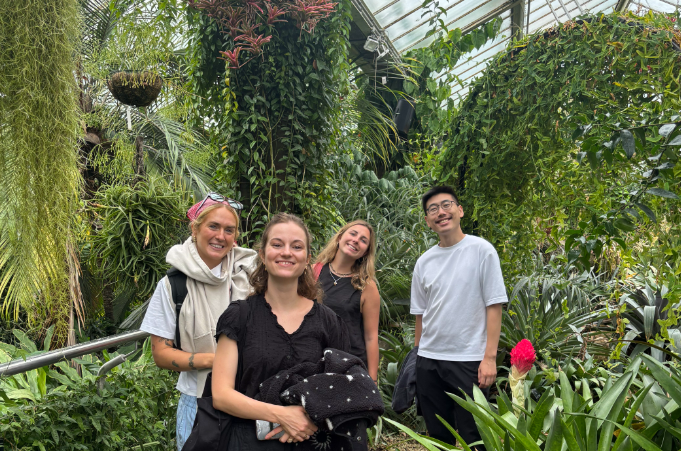
At Higson we know that lasting behaviour change doesn’t happen in one go, and it doesn’t need an overhaul to start. It comes from building intentional marginal gains over time. The next time your schedule’s already been knocked off course, be it in summer or another moment of disruption, space or change, you can use it as the invitation, not the obstacle. Choose one small idea that changes the way you work, interact, lead, or connect.